How do you protect a painting from sunlight?
17-10-2026
Where you hang a painting, the materials used, and how it is finished—all of these factors influence how long you will be able to enjoy a piece of art.
As an artist, I am frequently asked about the care and maintenance of paintings. How do you keep the colors vibrant? Can a painting fade due to sunlight? And does it matter where you hang it?
These are excellent questions. After all, when you purchase an original painting of value, you naturally want to enjoy it for as long as possible.
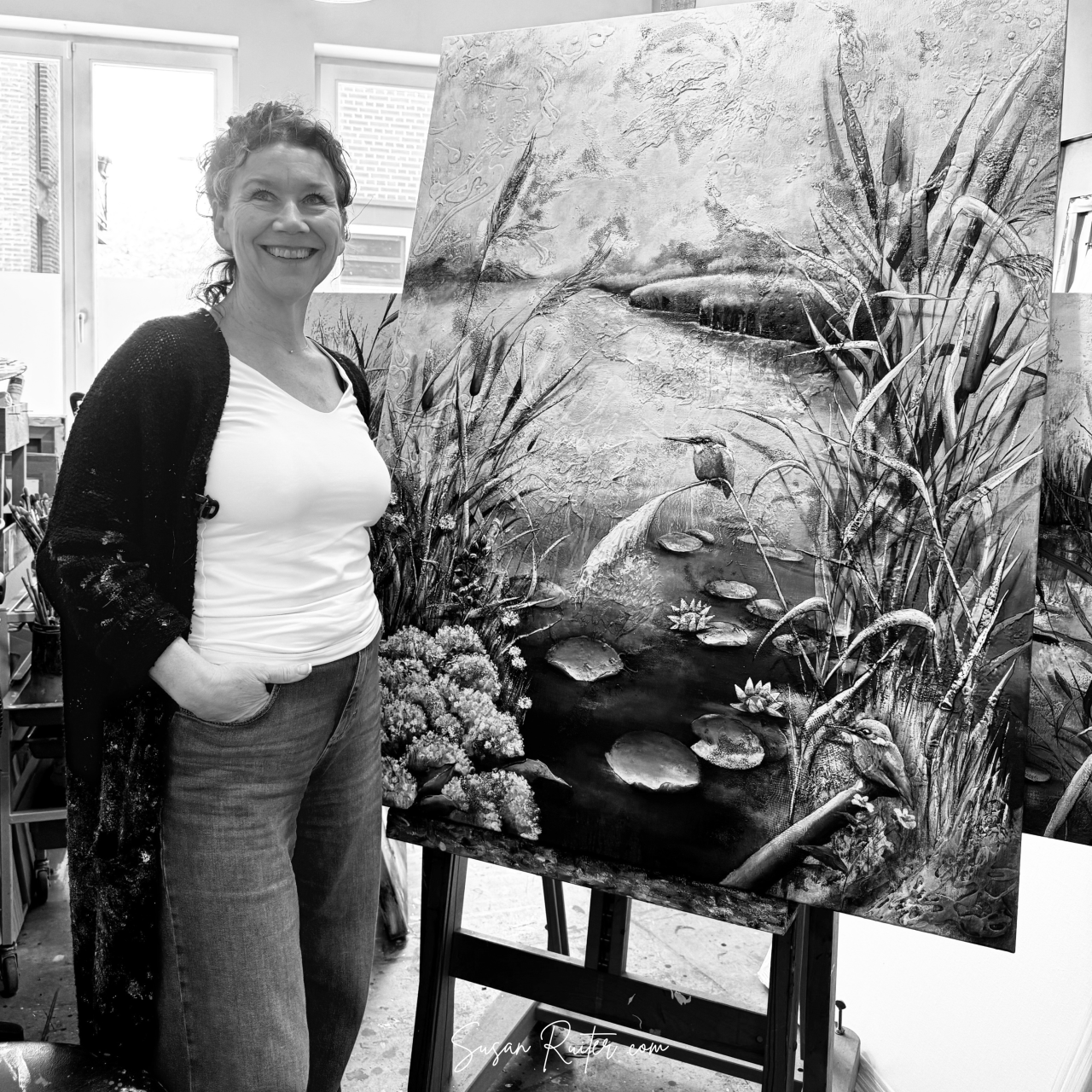
With over 30 years of experience as an artist, I know just how important the choice of materials, the finishing, and the location of a painting truly are. I would like to share a few things for you to keep in mind.
Daylight does wonders for a painting. It brings colors to life, reveals details, and can even shift the appearance of an artwork throughout the day.
However, direct sunlight is something to be mindful of. The ultraviolet (UV) radiation in sunlight can damage certain pigments. Furthermore, depending on the materials used, prolonged exposure to light can lead to fading. Over time, heat—as well as fluctuations in temperature and humidity—can also affect a painting.
Does this mean you have to hang a painting in a dark room?
Fortunately, no! It is all about choosing the right spot. My advice is to avoid hanging a painting on a wall that receives direct sunlight for extended periods. A location with indirect daylight is usually a great choice; it allows you to appreciate the artwork fully without exposing it unnecessarily to harsh, direct sun. You can also make use of window coverings. With the right curtains, blinds, or other window coverings, you can better control the amount of direct sunlight entering your home, without having to block out daylight entirely.
The quality of paint and pigments makes a difference.
When creating my paintings, I pay close attention to the materials I use. I work with high-quality acrylic paints and mediums, featuring pigments well-suited to my painting style.
Why does this matter? Because a painting should look beautiful not just on the day it is purchased—I want my work to retain its appearance and expressive power for years to come.
Lightfastness varies depending on the pigment and the type of paint. High-quality paint with well-documented lightfastness helps colors stay vibrant for longer. That said, no pigment is infinitely resistant to sunlight; the combination of materials used and the environment in which the artwork is displayed also play a role.
Once a painting is finished, I apply two coats of UV-protective varnish. This serves as an additional protective layer, shielding the paint from elements such as dirt and certain effects of UV radiation.
An important nuance: UV varnish does not make a painting completely immune to the effects of light. For this reason, the location where you choose to hang it remains significant.
Did you know that the orientation of a window affects how your painting looks?
Personally, I find this one of the most fascinating aspects of incorporating art into an interior.
A painting can look quite different depending on where it is placed in a home. This is influenced not only by wall colors or lighting, but also by the direction from which daylight enters the space. For example, if you have a large south-facing window, a significant amount of direct sunlight may enter at certain times. A north-facing window, by contrast, typically provides more consistent, indirect light. East- and west-facing windows also have their own distinct characteristics, receiving morning sun and afternoon or evening sun, respectively.
Light influences how you perceive colors. A painting might appear fresh and bright in the morning, while the same colors may look warmer later in the day. Furthermore, reflections on the surface can sometimes make certain details harder to see.
That is why, when offering advice on a painting, I always consider the intended location—looking not only at the size and colors of your interior, but also at the natural light and how it enters the space.
Practical tips to keep your painting in good condition:
- Avoid prolonged direct sunlight. Ideally, choose a spot where the sun does not shine directly onto the painting.
- Pay attention to how light enters the room. Observe how the light changes throughout the day and check for any distracting reflections.
- Keep away from heat sources. Do not hang a painting directly above a radiator or in any area subject to significant heat.
- Ensure a stable indoor climate. Avoid environments with large fluctuations in temperature or humidity.
- Dust with care. Use a soft, dry cloth, and avoid using cleaning agents or moisture on the surface of the painting.